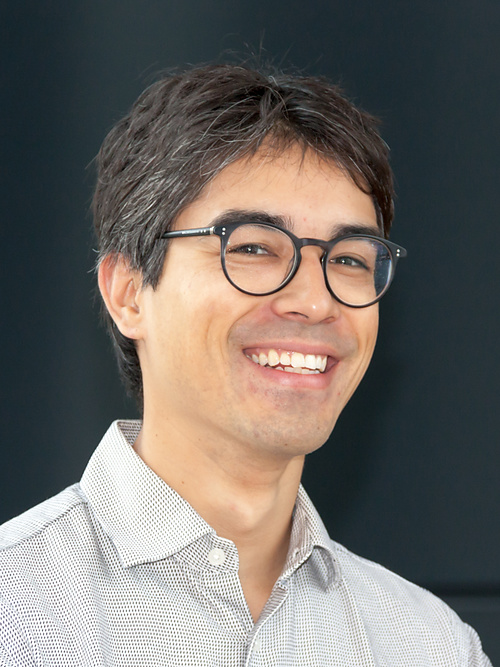
Soy un científico social y trabajo sobre procesos demográficos, dinámicas de parentesco, desigualdad y estimación demográfica en contextos de crisis y conflictos armados. Dirijo el Grupo de Investigación sobre Desigualdades de Parentesco en el Instituto Max Planck de Investigación Demográfica (MPIDR). También presido el panel de la Unión Internacional para el Estudio Científico de la Población (IUSSP) sobre Kinship Structures, Dynamics, and Inequalities.
Mi investigación examina cómo los cambios en los regímenes demográficos influyen en el duelo, el apoyo familiar y los resultados intergeneracionales en distintos países y contextos históricos.
Publicaciones seleccionadas
-
(2026).
"Weaponizing Kinship: A Demographic Analysis of Bereavement in the Colombian Conflict"
Population and Development Review.
DOI: 10.1111/padr.70048.
Primera autoría compartida con E. Acosta
The ongoing Colombian armed conflict has produced widespread homicides and enforced disappearances, as armed actors used violence to terrorize communities and consolidate power. Family bereavement—one of the most pervasive and enduring consequences of this violence—remains critically understudied from a quantitative perspective. We quantify the population burden of bereavement—ever having lost a family member to conflict—using kinship demographic models applied to 1985–2018 data compiled by the Truth Commission and the Special Jurisdiction for Peace, corrected for under-registration. By 2018, an estimated 7.5% of Colombians had lost a close relative and about 40% had lost at least one family member to conflict. Even assuming an over-optimistic scenario with no post-2018 violence, demographic projections indicate that conflict-related bereavement will remain visible well into the 2080s. Results are robust to subnational heterogeneity and alternative “bereavement memory” specifications. Reading these estimates alongside the Commission’s qualitative record underscores bereavement as a strategic mechanism of repression aimed at fracturing kin networks and community cohesion rather than a collateral by-product. Our demographic profiling of the bereaved informs population-health and psychosocial responses, including support for relatives of the disappeared, and can guide reparations and community-based programs that rebuild kin and neighborhood ties while strengthening guarantees of non-repetition.
@article{acosta_weaponizing_2026, title = {Weaponizing {Kinship}: {A} {Demographic} {Analysis} of {Bereavement} in the {Colombian} {Conflict}}, url = {https://onlinelibrary.wiley.com/doi/10.1111/padr.70048}, doi = {10.1111/padr.70048}, journal = {Population and Development Review}, author = {Acosta, Enrique and Alburez-Gutierrez, Diego and Gargiulo, Maria and Torres, Catalina}, year = {2026} } -
(2025).
"Research Note: Estimating Kinship Size of Older Adults in Europe with Models and Surveys"
Demography, 11961236.
DOI: 10.1215/00703370-11961236.
Measures of kinship size are increasingly common in sociodemographic studies. The size and structure of older adults’ kinship networks can be ascertained via direct observation in a social survey or modeled using demographic techniques. Each approach has advantages and disadvantages, but whether the two provide comparable estimates of kinship size is an open question. In this research note, we answer this question using social survey data and demographic models to estimate the size of older adults’ kinship networks in 22 European countries. We find an impressively high association between the two approaches, with important variations by the kin type considered. We discuss the reasons for the divergence in the estimates and provide guidance for researchers interested in using either approach to quantify kinship size.
@article{van_damme_research_2025, title = {Research {Note}: {Estimating} {Kinship} {Size} of {Older} {Adults} in {Europe} {With} {Models} and {Surveys}}, url = {https://read.dukeupress.edu/demography/article/doi/10.1215/00703370-11961236/400496/Research-Note-Estimating-Kinship-Size-of-Older}, doi = {10.1215/00703370-11961236}, journal = {Demography}, author = {Van Damme, Maike and Alburez-Gutierrez, Diego and Castro Torres, Andrés F.}, year = {2025}, pages = {763--772}, volume = {62}, number = {3} } -
(2023).
"Projections of human kinship for all countries"
Proceedings of the National Academy of Sciences, 120(52):e2315722120.
DOI: 10.1073/pnas.2315722120.
Demographers have long attempted to project future changes in the size and composition of populations, but have ignored what these processes will mean for the size, composition, and age distribution of family networks. Kinship structures matter because family solidarity—a crucial source of informal care for millions of people around the world—is conditional on kin being alive. Here, we present innovative projections of biological kin for the 1950 to 2100 period and discuss what they imply for the availability of informal care. Overall, we project that the number of living kin for individuals will decline dramatically worldwide. While a 65-yo woman in 1950 could expect to have 41 living kin, a 65-yo woman in 2095 is projected to have just 25 [18.8 to 34.7] relatives (lower and upper 80% projection intervals). This represents a 38% [15 to 54] global decline. The composition of family networks is also expected to change, with the numbers of living grandparents and great-grandparents markedly increasing, and the numbers of cousins, nieces and nephews, and grandchildren declining. Family networks will age considerably, as we project a widening age gap between individuals and their kin due to lower and later fertility and longer lifespans. In Italy, for example, the average age of a grandmother of a 35-yo woman is expected to increase from 77.9 y in 1950 to 87.7 y [87.1 to 88.5] in 2095. The projected changes in kin supply will put pressure on the already stretched institutional systems of social support, as more individuals age with smaller and older family networks.
@article{alburez-gutierrez_projections_2023,
  title = {Projections of human kinship for all countries},
  volume = {120},
  url = {https://doi.org/10.1073/pnas.2315722120},
  doi = {10.1073/pnas.2315722120},
  number = {52},
  journal = {Proceedings of the National Academy of Sciences},
  publisher = {Proceedings of the National Academy of Sciences},
  author = {Alburez-Gutierrez, Diego and Williams, Iván and Caswell, Hal},
  year = {2023},
  pages = {e2315722120}
}